
- Home
- About Us
- Services
- GALLERY PAGES
- Our Blogs
- Contact Us


- Home
- About Us
- Services
- GALLERY PAGES
- Our Blogs
- Contact Us
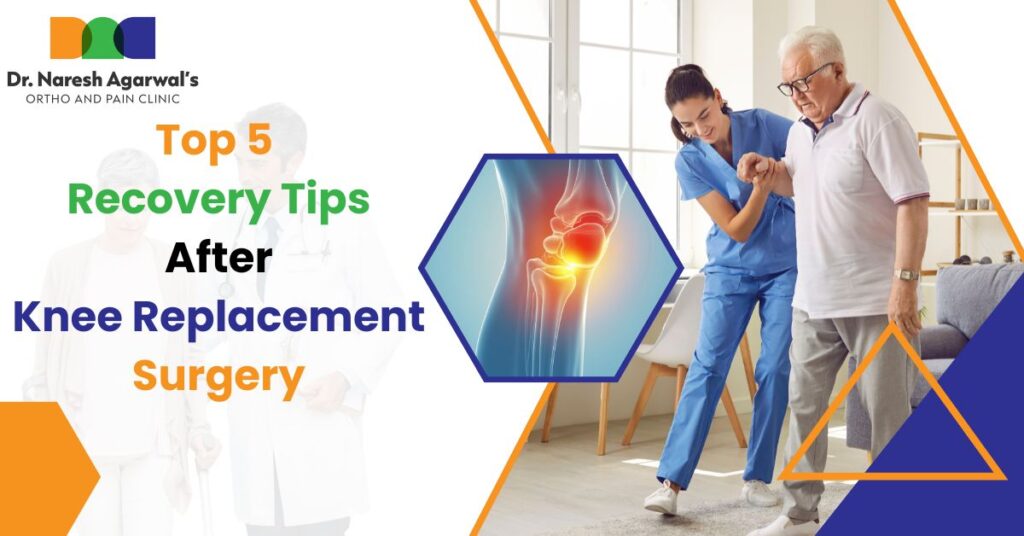
Knee replacement surgery is life-changing for people who have struggled with chronic knee pain, arthritis, mobility limitations, or knee injuries. While the surgery itself is a major step toward a pain-free and active life, the real success of the procedure depends heavily on the recovery process. Proper post-surgery care ensures better mobility, stronger joints, fewer complications, and long-lasting results.
To help patients achieve the best possible outcome, here are the top five essential recovery tips after knee replacement surgery, explained in a simple and practical way.
Physiotherapy is the cornerstone of knee replacement recovery. The new joint needs guided movement to regain strength, flexibility, and stability. Delaying therapy or skipping sessions may lead to stiffness, slow progress, or reduced range of motion.
Early and consistent physiotherapy is one of the strongest predictors of a smooth and successful recovery.
Pain after knee surgery is normal, but unmanaged pain can make it difficult to walk, exercise, or sleep. This slows your healing process and affects your ability to perform physiotherapy, which is crucial for recovery.
Proper pain management not only improves comfort but also helps you stay active during the recovery phase.
Your body requires nutrients to repair tissues, rebuild strength, and reduce inflammation. A balanced diet also supports immunity and helps prevent infections—one of the most important aspects of post-operative care.
Eating nutritious meals helps you regain strength quicker and supports overall recovery.
A newly replaced knee joint is delicate during the initial weeks. Taking small precautions can prevent injuries, implant damage, falls, or instability.
Following these precautions helps protect your new knee and ensures a smooth and safe recovery.
Your recovery doesn’t end at home. Regular medical checkups allow your surgeon to monitor healing, check implant alignment, and assess mobility progress. Skipping follow-ups may delay the detection of complications or slow recovery.
Your surgeon’s expertise and instructions are essential in guiding you toward a strong and stable recovery.
Recovering after knee replacement surgery requires commitment, discipline, and the right guidance. By focusing on physiotherapy, managing pain effectively, eating a nutritious diet, following safety precautions, and attending regular follow-ups, patients can regain mobility faster and enjoy long-lasting results. For those seeking expert orthopedic care, advanced surgical techniques, and comprehensive pain management support, Dr. Naresh Agarwal offers the trusted guidance needed for a smooth recovery and a pain-free life.
Hello 👋, how may I help you today?
Are you looking to book an appointment with Dr. Naresh Agarwal?
WhatsApp Us
Online | Privacy policy
WhatsApp us
Leave a Reply